
Huynh Khanh Trang squats in the dust at dawn. She has stopped to inspect a peculiar shell lying in the road that glints in the slowly intensifying brightness of the new day. Trang, or Lena as her mother calls her, is in no hurry. It is early yet. She has just now come from the beach with her grandfather, Dat. The early ride to the beach on her grandfather’s bicycle is the morning ritual she looks forward to eagerly each day. This is her quiet time with Grandfather that they share together alone as the quiet South China Sea comes slowly to life.
Lena’s grandfather has been her almost constant companion since her mother fled to the country. After the Communist Easter Offensive in 1972, the year of Lena’s birth, her village on the outskirts of Da Nang has become an uncertain place. Anyone who has an “American connection” lives in fear now that the Communists have taken control of her village. Anyone who worked for the Americans, sold to the Americans, loved an American, is in danger.
Lena, an Amerasian girl, born to her Vietnamese mother and American soldier father, knows this. It is why her mother had to go away to hide in Quang Ngai. It is why she is rarely allowed outside during the day. When she does go out, her grandmother generously applies a layer of fireplace soot to her face and arms to make her skin appear darker. Lena has fine, high cheekbones like most of her Kinh race, but her skin color is obvious evidence of mixed blood.
Often Dat will bring a book with him on their trip to the beach, a children’s book in English that he will read to her slowly, carefully, yet loudly. Dat believes that the louder one speaks English, the better it will stick in the memory. Four year old Lena believes this, and when it is her turn to read a sentence or two from the book she will read as loudly as she can. There are few people on the beach at this hour, but those passersby don’t seem to mind. An old man and his granddaughter should be free to have their moments as they choose, even to speak a language that is of no use anymore. The Americans have gone and taken their confusing language with them.
The year is 1975 and the Communists are still celebrating their great victory in Vietnam. Soviet tanks crewed by hardened veteran North Vietnamese soldiers crashed through the gates of Independence Palace in Saigon on March 30 and the seemingly endless war was over.
That same day, Dat carried young Lena on his shoulders to the side of the wide Duong Duy Tan in Da Nang to watch as 100,000 North Vietnam Army soldiers marched past. There was little cheering. For the most part the civilians in the crowd lining the boulevard were silent, many with bowed heads, eyes downcast, as the troops filed by. If this was a liberation, it was a solemn one indeed.
Later that night, there would be much shooting as the Communists celebrated their victory. The victorious soldiers looted liquor and food stores, firing wildly into the night with AK-47 automatic rifles. Many of those bullets fired in jubilation would find their mark, killing and wounding a number of unsuspecting civilians. This was not a safe night to be on the streets of Da Nang.
Dat had pulled the heavy steel doors closed across the front of his shop. The stainless steel chain and padlock were of course no deterrent to the marauding troops, one burst from an AK-47 would have taken care of that.
Dat’s shop was a novelty and souvenir shop left over from the not too distant days when American troops would spend Military Payment Certificates (MPC), or sometimes even US dollars for trinkets to remember their time in Vietnam. The glass display case featured Zippo lighters with engraved military insignia, photo albums emblazoned withVietnam map covers, posters that read “When I Die I’ll Go To Heaven, Because I’ve Spent My Time In Hell”, marijuana rolling papers and intricately carved ivory pipes. This collection of American has-been debris was of little interest to the victorious Communist soldiers. Tonight they were after alcohol, food, and tobacco, none of which lined the nearly bare shelves of Dat’s small shop. The kerosene lamps inside remained unlit.
Peering out through the louvered window slats, Dat and Lena stayed quiet and still, she on his lap, his arms wrapped tightly around her. Often a question would come to Lena’s mind, but as she turned to whisper it to her grandfather, he would quiet her with a faint “im lang” as the boisterous revelry swirled down the dusty, littered village street.
This was Lena’s first look at the men who had been her father’s enemies. Not that she had known her father, he had left Vietnam three years ago well before she was born. But her mother and grandfather had kept him alive in her mind and told her daily that he would soon be coming back to Vietnam to take them away to the United States. This new development, this communist victory, seemed a complication to that plan in Lena’s inquisitive young mind. These men having their way with her village seemed so confident, so sure of themselves, how was Lena’s father to return to fight them all and rescue her and her family?
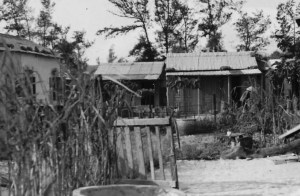 That terrifying night now a fading but persistent memory, Lena straightens to peer down the main street of her small world. Her interest still fixed on the shell in her small hand, she is distracted; not by a noise, but by the silence. Looking about she sees her village as it is, wood structures lining the road, tin roofs, the street unkempt, trash blown to the side up and down the street, a tree or two here and there, the smoke of freshly lit cook fires, people beginning another day in Khu Dinh. What has distracted her are the birds. Lena has always loved to watch and listen to the birds in the early morning light. But this morning, they don’t sing, there is only an eerie quiet. She remembers the sweet songs of the birds in the early morning, yet now there is no song to blend with the other familiar sounds. The birds just don’t sing anymore.


This story is so well written. Thoughtful, heartbreaking,
The layers of information about how she grew up inspire me to keep reading.
LikeLike