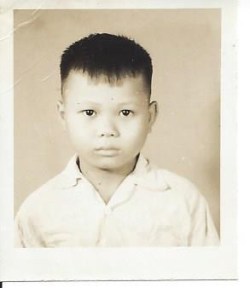
 This boy’s face has haunted me for forty-five years. His photo, obviously a school picture, was placed in one of my Vietnam photo albums in 1972 by Lena’s mother, Huong. The photo albums, familiar to all Vietnam Vets, were covered in brightly coloured leather, red, blue, green, with a map of Vietnam on the cover. My albums, still intact, are the repository for my memories of a place and time long since gone. Most of the photos were taken by me or my fellow soldiers. Some, like Tiên’s, were slipped in by Huong, usually with an accompanying explanation. Who, what, where. But not this one.
This boy, Tiên, remained a mystery to me for all these years. I became accustomed to passing quickly over his photo when glancing through the albums. Yet there was always a nagging moment, a question.
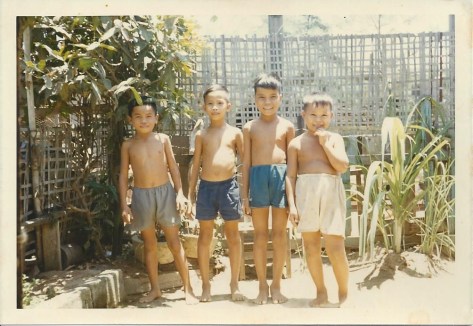 Recently I came across this photo of Huong’s brother Hung with some other boys. Hung is the one on the left. He was well known to me during the war, I would recognise him anywhere. When in Da Nang, I see him every day, eat meals in his home. When I looked closely at the photo, there was Tiên, on the far right, smack in the middle of my 1972 Vietnam experience.
 Hung told me Tiên’s story and taught me a side of my prospective father-in-law Dat that had alluded me until now,
In the 1970’s, the Americans were embarked on a plan called “Vietnamization”, deserting South Vietnam to an ultimate defeat in their war with the communists from the North. Years of fighting had left homeless orphans roaming the countryside with no plan, no hope, no future. Tiên was one of those who had lost his family and was alone.
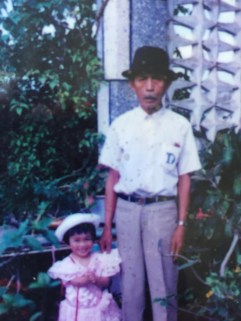 Huynh Dat, a graceful, vibrant, spiritual man, took Tiên into his home and raised him as his son until 1975. At the end of the war, Tiên was returned to his village in Quang Nam.
Learning that Huynh Dat had taken in orphans during the war came as no real surprise to me. His sacrifice and commitment to others was a palpable force. He enhanced the lives of those around him, not because of what he said, but through the actions he took. Dat’s legacy grows for me with each new revelation. I am blessed to have known Huynh Dat.
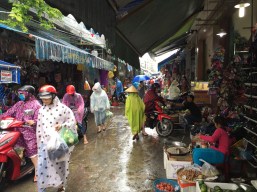 Rainy Day in Da Nang so Van and Tam took me to breakfast and the market. My Vietnamese is woefully inadequate, without family to take care of me here in Da Nang I would be nothing more than a victim.
 Driver, hotel, route, dates, length of stay all decided through the use of Vietnamese/English Online Translator. Thankfully every shop, restaurant, and coffee house has WiFi.
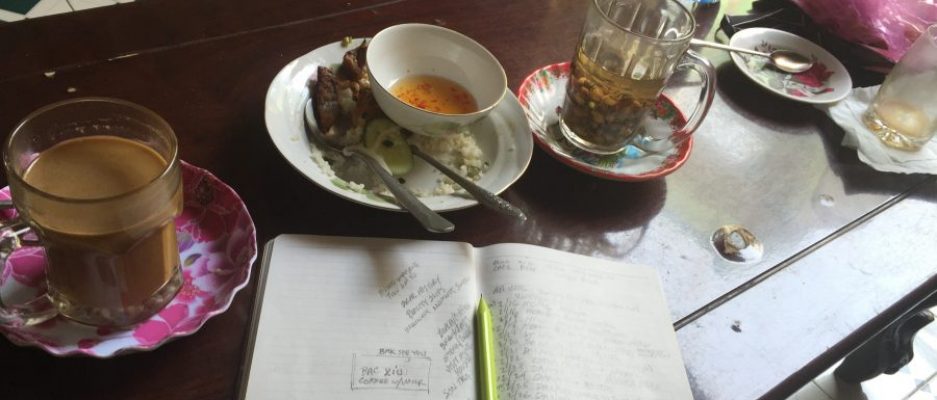
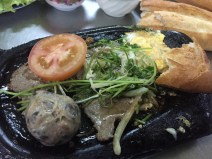 After breakfast, we went to a coffee shop nearby since coffee was not served at the Bò Né restaurant. Over bac Xíu nam (hot Vietnamese coffee with milk) we concluded our trip planning.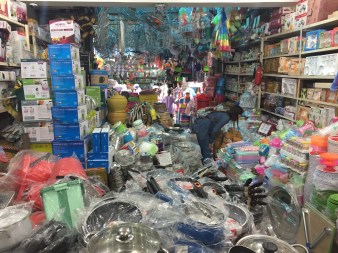
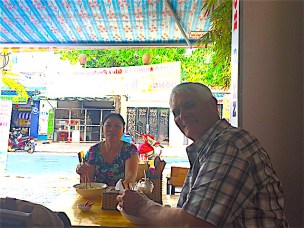 Aunt Thu and I having breakfast my first morning back in Vietnam, April 11, 2017.
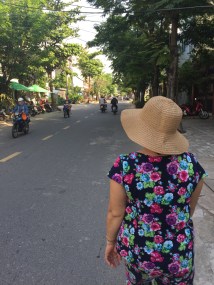 My first trip to Vietnam at age 19 in 1971 led me on a fate-powered journey to write my daughter’s story, “Letter from Lena”. I am here for 5 weeks to finish that story. I live in an apartment near my family, none of whom speak English. For the next few days I am without the aid of my able interpreter and niece, Xuân. She is in Saigon with her father Hung completing an exit interview so she can accompany me back to the United States in the middle of May. Xuân plans to attend the University of North Texas while living with my daughter Lena in Dallas.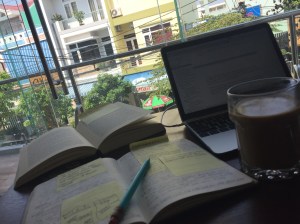
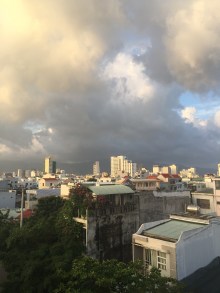 It rained for most of the day. Perfect day for writing scenes so delicately intimate that I imagine them being read by flashlight under the bedcovers during a storm that has robbed any possibility of household electricity. I looked up to see this scene out the window of my apartment and I had to stop and reflect.
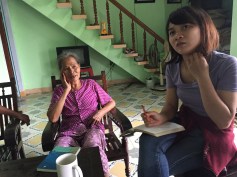 Competent, articulate, inquisitive, she reminds me of her grandfather Dat who I have researched steadfastly and written about extensively. Dat was my friend and one of the most interesting, engaging, and authentic of men. And here she is, taking Dat’s place in the world and in my imagination as the bright future of Vietnam. Notebook always at hand, Xuân is learning English as she works as an interpreter. Try that sometime. To improve her English skills Xuân is reading a copy of John Steinbeck’s “The Red Pony”
  while listening to a narrated version accessed through Audible on her iPhone. She makes notes and the following day asks for clarification on details like what a “bunkhouse” might be, or why when Billy Buck “curries and brushes two saddle horses” he uses spicy Indian food on the horse. Tenacious, motivated, inspired.
 On Tuesday Xuân has organised a trip to a children’s kindergarten in Quang Nam Province so that we can view the work of a Da Nang non-profit, Children of Vietnam, that works to provide better lives for disadvantaged indigenous children living in rural Vietnam. Not something we had planned on this trip, but a strong reminder that there are no accidents, only fate by a different name. Thank you Xuân for all your help and particularly your unflinching faith in this journey.
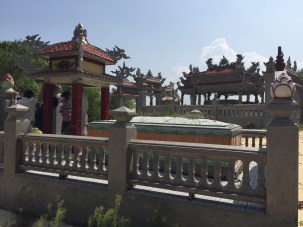 Many of the sites honor men and women that I knew during my previous time here in 1971/72.
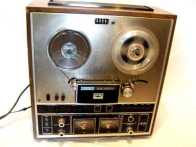 Nearly every American GI hootch had a reel to reel tape player as this was before the availability of cassette tapes. Not surprisingly, the problem was getting quality music that 19 year old rock and rollers with one foot in the grave wanted to listen to. Tapes for sale in the PX generally ran to the “Bing Crosby’s Christmas” and Nat King Cole’s “Love Songs” variety. Most of our music was bootlegged, sent from brothers and sisters at home originally and duplicated and reduplicated (my apologies to the artists of the time). We wanted Jimi and Janis and the Airplane and the Stones and the Dead.
 I had purchased a reel to reel at the PX for Dat’s house in his village of An Cu. He took great pride in this gift and would bring others from the village to look at it. Strangely, looking seemed to be enough. I never saw him once demonstrate the machine for anyone. I had the good fortune to get my hands on a copy of “Freewheeling’ Bob Dylan” and would play it soft and low some evenings when staying in the village. This recording was Dat’s favorite and he would often look up from his reading during particular segments of the playback. Of all of the brilliant tracks on that album, the B Side of “Blowin’ in the Wind”, “Don’t Think Twice, It’s Alright” was dearest to him. On hearing Dylan perform that song, Dat would have me rewind the reel so he could hear it again. And maybe again.
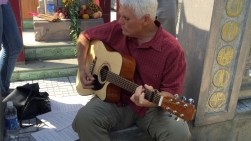 The first, “Knockin’ on Heaven’s Door” I do not know if he had ever heard before as it was released one year after my time with him in Vietnam. But it somehow seemed just right and if even unfamiliar, I am hopeful he accepted it with the gratitude and love with which it was meant. the second song, “Don’t Think Twice, It’s Alright”, I knew he would recognise and being the man that he was, forgive my sloppy rendition. So marvelously coincidental that Bob Dylan has been rewarded with the Nobel Prize in Literature at the time that I could share Bob’s masterful work with Dat one more time. Rest in everlasting peace my friend, Huynh Dat.
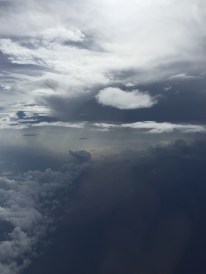 It is the rainy season here in Da Nang where we can expect an average rainfall of 15 to 25 inches of rain for the month of October. I was here on active duty in 1971 when Typhoon Hester, the most powerful typhoon to hit Vietnam since 1945 ripped through Da Nang. Here is an excerpt from my impression of that time: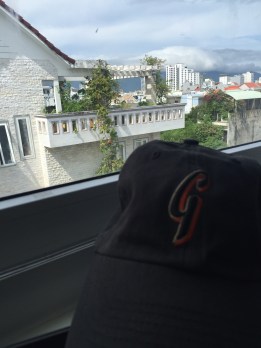

 Sunrise over Hong Kong thrilling as I change planes to transit to Da Nang, a one and a half hour flight. Sat next to a perfectly adorable Chinese couple on the 14 hour flight who had been vacationing in San Francisco, Las Vegas, and improbably, Horseshoe Bend. When they learned I was on the way to Da Nang to finish a book I am writing, the husband said, “Ah, another Vietnam War Story.” I corrected him, telling him this was a love story and family saga, the war was simply a compelling backdrop. Hearing this, they insisted on hearing the entire story. Love trumps war every time. Boarding for Da Nang, goodbye for now.
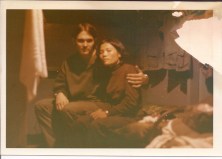 As my time to return to the US drew near, Huong and I agreed that she would follow me to become my wife in the United States. After a tearful, yet hopeful goodbye, I left Vietnam. Four days later the communists crossed the Demilitarized Zone with Russian tanks in what would be called the Easter Offensive, taking control of many of the northern provinces of South Vietnam, including Huong’s Village. In terror, Huong burned all of the documents we had so carefully assembled, paperwork that was her ticket out of Vietnam. I never saw her again.
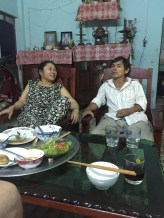 Thu’s cooking is a keenly anticipated highlight of my visits to Da Nang. She watches my rice bowl as would a bird of prey, constantly refilling it with morsels more delicious than the last. I have, at times, resorted to hiding my bowl in self defense.
 letterfromlena