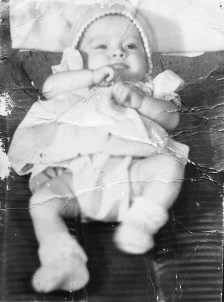
 (Excerpt: Letter From Lena) Lena was born into a hostile, bitter world. The year is 1972, near the end of the “American War”. Nearly every Vietnamese has reason to hate the U.S. In the countryside, thousands of homes had been burned for nothing more than being in the way of the war. Families that had worked the same land for generations were uprooted, moved to places unknown to them. Urban Vietnamese were increasingly dependent on the U.S. War economy, many forced into the black market, prostitution, and drug dealing to survive.
Northerners hated Americans for occupying their divided country, while Southerners hated Americans for abandoning them, leaving a struggling independent nation to certain defeat at the hands of the communists. Much of the anger, hatred of everything American, was directed at the ones left behind, the children of U.S. military personnel. Lena was one of these. At war’s end, the people of her village, her neighbors, outcast Lena, decisively, unconditionally.
But that was outside the house, in the village streets, at school. Within the confines of her dark, cool, home Lena was safe. In there, with her grandmothers Phai and Tuoi, and grandfather Dat protecting, guiding, gently showing her the ways of this strange new world, Lena would know the comfort of how it is to be loved completely. Without sin, without judgment for crimes she would be punished for, crimes not of her making.
Outside, in the raw, pitiless village, she would learn the sharp barb of unfocused hate – hatred not of who she is, but of what she represents. Lena is a white face in a sea of unforgiving yellow. School is the worst. Here the daughter of an American is not wanted and cannot hide. 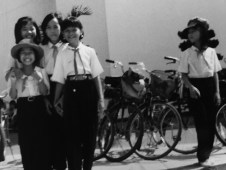
Lena stands in the familiar classroom corner, counting cracks in the concrete wall. Her face is six inches from the bare wall that long ago shed the last vestige of paint. She knows every crevice, every bump, every hole that might contain a spider who, on a good day, will venture out to entertain her. Her teacher, Mr. Phan, has ordered Lena to stand in her well-known corner at attention, ramrod straight. Now in her second month at school, the teacher doesn’t even waste words with Lena, only gestures sternly with his head toward the corner. With eyes defiantly glaring at each of her grinning classmates in turn, Lena retreats to her corner.
Lena thinks of this as her corner, as other students rarely occupy it. She is dressed like all the other girls, white blouse, pleated blue skirt, red neckerchief, but knows that she is different. Her skin is lighter and she is noticeably taller than her fellow students. Today, like everyday, she is taunted by the other students while outside at exercise. She has been called a “half-breed dog” before, but today Lena heard a word spit at her by a girl named Cuc that surprised and confused her.
As the bell was struck for the lineup to return to class, “Go home, you American bastard!”, rang in Lena’s ears. Not sure about the true meaning of the insult, it is an insult nonetheless and has to be answered. Lena lunged for Cuc, catching the retreating girl by her red neckerchief and dragged her to the hard dusty ground. As the two girls struggled, Cuc screaming, the Headmaster lifted Lena to her feet and tossed her toward the line of children, many of them laughing openly. Cuc was lifted gently to her feet and escorted, crying, into the building by the Headmaster. As the line of boys and girls entered the classroom, Mr. Phan caught Lena’s eye, ordering her to the corner once more.
Lena knew the word “bastard” and roughly knew what it meant, but she wasn’t sure why her aggressor had called her an “American”. She isn’t American, she is Vietnamese. She has lived in An Cu village all of her life. Her mother, her grandfather, her grandmothers, all are Vietnamese. Lena speaks Vietnamese and thinks only in Vietnamese. Lena’s father is an American soldier, but he is long gone. She knows not a word of English. Lena is Vietnamese in her mind and soul.
Lena learned early in her school career that in her corner, imagination, letting her mind wander, is her only relief. She would often try to picture her father, a man she had never known. Though she was born 8 months after he had left Vietnam, she was sure he was out there somewhere, desperately trying to get back to her and her family village just outside Da Nang. She would shut her eyes, grimacing, willing her brain to conjure up an image, any image of the man she most wanted in the world. Try as she might his face would not come to her. She relied on the recollections, the imprecise memories of her grandfather and grandmothers for clues to this man she knew it was her mission in life to find.
Lena’s grandfather Dat would tell her not to worry, “when life is back to normal your dad will come to get you and take you to America. In America, it is like Heaven. To stay in Vietnam is like Hell.”
 letterfromlena